
‘A SHARP STING AND TWO CLEAR MARKS’. That’s how most of us picture a snake bite to be, as something you’d notice right away.
However, a krait bite is different. It often comes with no pain and no bite marks. That is what makes it so dangerous.
Here’s what to know about krait bite symptoms, plus the true story of a six-year-old who survived one at ITSA Hospitals Raipur.

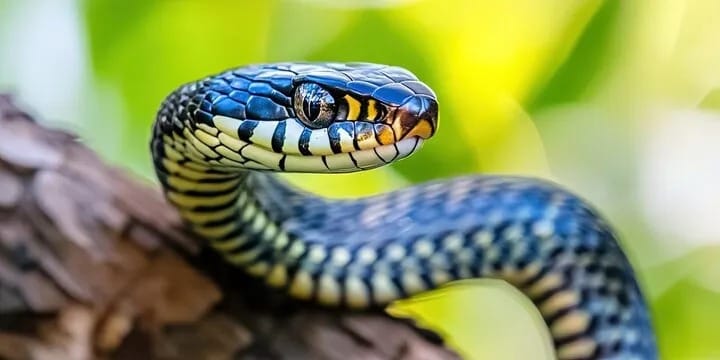
A krait bite comes from the common krait, a slim black snake with thin white bands. Its nerve-attacking (neurotoxic) venom slowly weakens the muscles, including the ones we breathe with.
The krait is one of India’s “Big Four” venomous snakes, along with the cobra, Russell’s viper and saw-scaled viper. Snake bites claim about 58,000 lives in India every year.
Symptoms usually start with stomach pain, followed by weakness and trouble breathing. They may take a few hours to show up.
Snake bites in children can be difficult to spot. Here is one critical case we encountered at ITSA.
A six-year-old girl-child woke up with severe stomach pain. Her parents thought it was just a routine stomach upset.
Soon she felt dizzy, her breathing slowed and she collapsed before she reached the hospital.
She was rushed to the children’s intensive care unit (PICU) and put on a ventilator. She remained unconscious and did not respond to touch or sound.


Her care was led by Dr. Sachin Pitlawar, Director & Senior Consultant Neonatologist and Pediatrician, and Dr. Swasti Keshri, Consultant in Pediatric Emergency Medicine and Pediatric Intensivist (DM, AIIMS). Pediatricians Dr. Kashifa Khan, Jr. Consultant Pediatrician, Dr. Mayank Dwivedi, Consultant Pediatrician supported the team.
No one had seen a snake and there were no bite marks to suggest one. But stomach pain, then breathing trouble and unconsciousness pointed the doctors to a krait bite.
“Patients with severe neurotoxic snake bites can sometimes appear brain dead, but timely treatment can still save them,” explains Dr. Swasti Keshri.
She went through the treatment and walked out of the hospital fully recovered. Beyond experts care, its also important for parents to act quickly and consult a doctor early in such cases.
Even if there were no fang marks visible, symptoms that make your child unwell should never be dismissed as a simple stomach upset.
Treat every suspected snake bite as a medical emergency. Keep the person still and head straight to a hospital that has antivenom.
Yes. Its fangs are tiny and the bite is often painless, so marks can be very hard to see.
Usually within a few hours. Stomach pain is often the first sign, especially in children.
Yes. Krait venom can stop breathing and movement for a while. With quick hospital care, many patients recover fully.
Sudden, unexplained stomach pain followed by weakness or breathing trouble needs emergency care, even if you are not certain about the problem.
Getting help fast is what gave this child a second chance at life. Medical emergency always needs a quick action.

This article is based on a case reported by Dr. Sachin Pitlawar, Director & Senior Consultant Neonatologist and Pediatrician, and Dr. Swasti Keshri, Consultant in Pediatric Emergency Medicine and Pediatric Intensivist (DM, AIIMS), at ITSA Hospitals, Raipur. It is intended for general awareness and does not replace professional medical advice. If you suspect a snake bite, please seek emergency care immediately and consult a qualified pediatrician or emergency physician for any concerns about your child’s health.

Partial knee replacement in Chhattisgarh offers an advanced, minimally invasive option through CT-guided robotic joint replacement. A CT scan builds...
November 2, 2026 Read More

Noticing your newborn's belly looking swollen can be worrying. However, not every newborn swollen belly is serious; some fullness is...
October 15, 2026 Read More

Kidney stones affect millions of people worldwide, yet many don't understand why they develop in the first place. A kidney...
October 12, 2026 Read More